
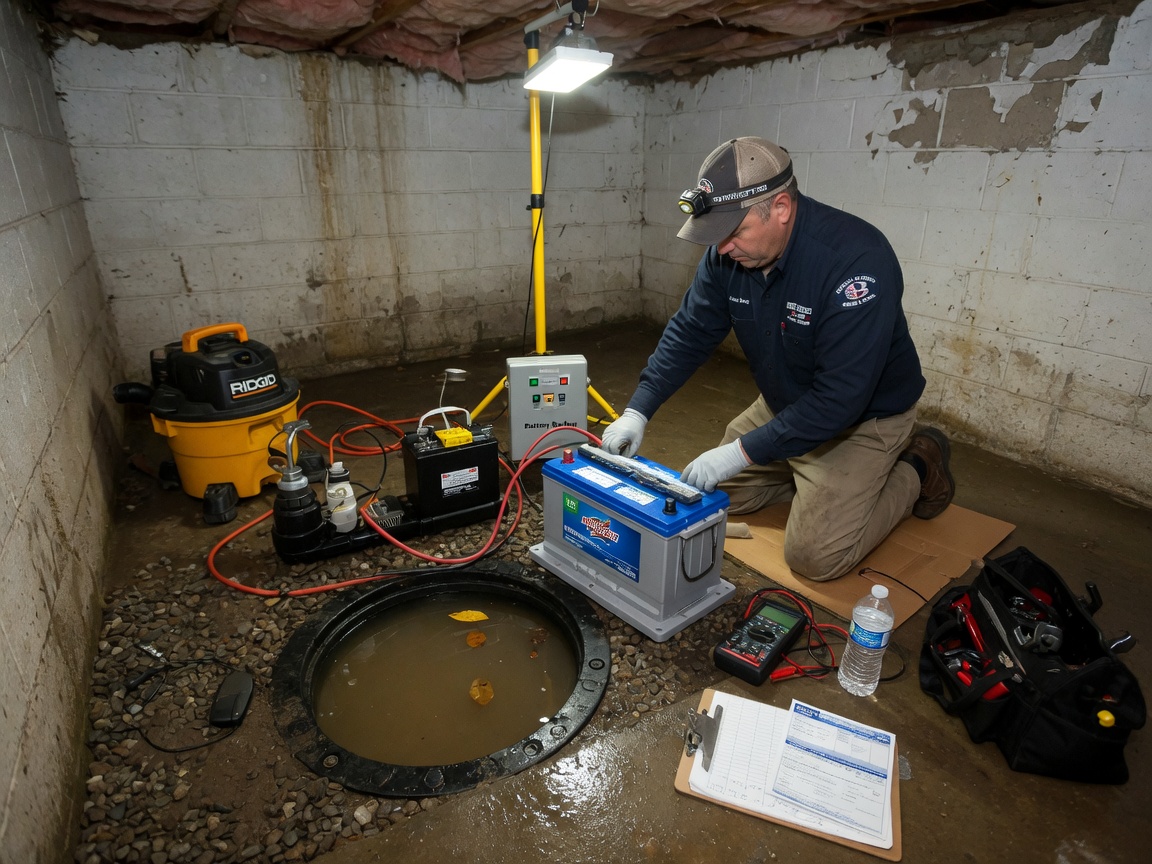
Southeast South Bend is mostly post-war housing — 1940s through 1960s single-family homes on regular lots, the stretch running south and east of downtown toward Riley High School. The basements here are generally in better shape than the pre-1930 stock closer to the river, but they share one problem: the sump systems are original, and a pump installed when the house was built has long since passed any reasonable service life even if it is still turning.
Drainage on this side of the city is flatter than it looks. Without the grade that carries water away on the higher north side, discharge lines need more length and a properly chosen outlet to get water genuinely clear of the foundation, and a short line here will simply recirculate the same water back toward the house through the soil. We see that pattern often enough on these streets that we check the outlet before we check anything else when a homeowner reports a pump that never seems to catch up.
The work splits predictably. Original 1950s and 1960s pits are frequently too small for a house that now has gutters and a paved drive feeding the same foundation, which is sump pit and basin work. Pumps at this age are either a cheap parts fix through troubleshooting and repair or a genuine replacement, and we measure amp draw to tell you which. Nearby Rum Village and River Park run on much the same pattern.
Around Southeast South Bend
We regularly work near:
- 📍Riley High School
- 📍Ravina Park
- 📍Southeast Neighborhood Park
- 📍Miami Street
Sump Pump Repair in Southeast South Bend — Local Notes
- •Post-war housing from the 1940s to 1960s means original sump systems that are well past typical service life even when still running.
- •Flatter ground on the southeast side gives discharge water less help, so lines need more length and a carefully chosen outlet.
- •Short discharge runs here recirculate water back toward the foundation through the soil rather than clearing it.
- •Original pits were sized before gutters and paved drives were directing extra runoff at the same foundation.
- •Basements in this stock are generally sounder than the pre-1930 homes near the river, so repair is more often worthwhile than replacement.